 Diya
DiyaA Personal Reflection
Why Sanatana Dharma is Truth to Me
Where ancient wisdom meets modern science, and where archaeology keeps confirming what the texts have always said
Sanatana Dharma, the eternal way of life, has always fascinated me. Not just as a spiritual path. As a complete system of knowledge that integrates spirituality with science, philosophy with practicality, and ancient wisdom with modern discovery.
What makes Hinduism compelling to me is not blind faith. It is the remarkable alignment of its ancient teachings with what modern science is discovering. The more we learn, the more it looks like the rishis got there first. They got there through meditation and introspection instead of laboratories, but they got there.
Scientific Resonance
Ancient wisdom validated by modern science
Evolution in the Dashavatara
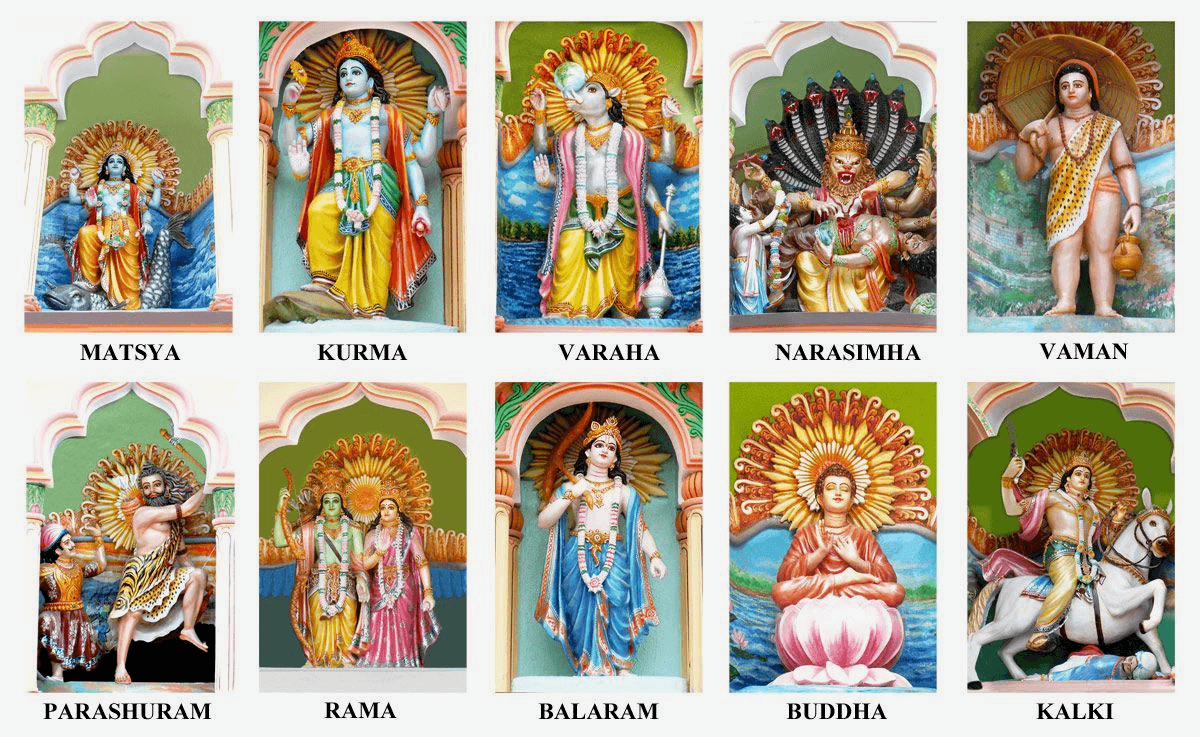
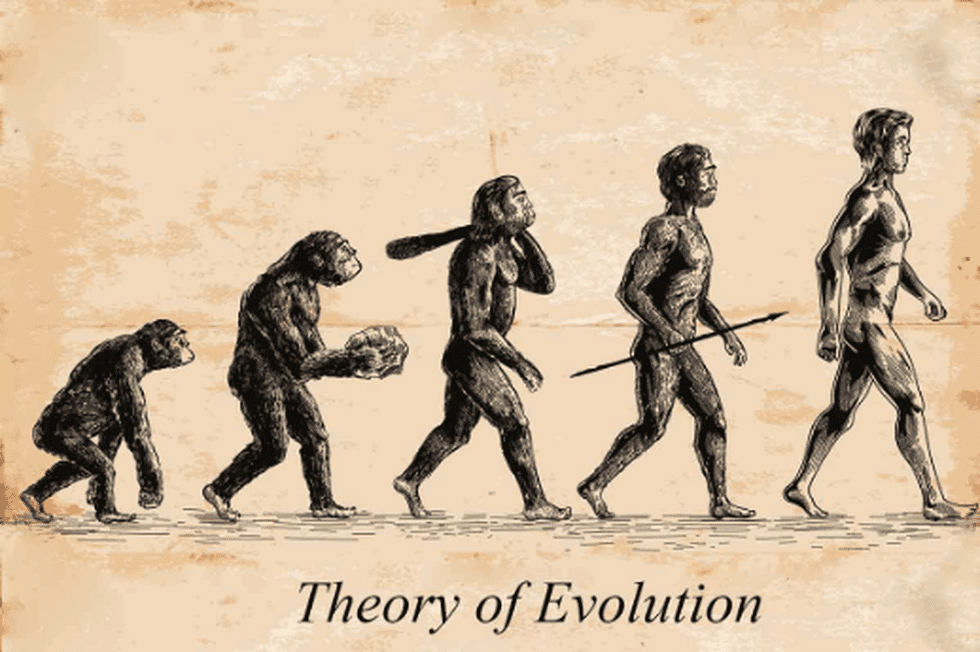
The ten avatars of Lord Vishnu describe an order that looks remarkably like the progression modern biology arrived at much later. It starts with Matsya, the fish, the aquatic stage. Then Kurma, the tortoise, the amphibian crossover. Then Varaha, the boar, the land mammal. Then Narasimha, half-man and half-lion, the transitional being. Then Vamana, the dwarf, an early form of the human. Then full humans in Parashurama, Rama, and Krishna. The sequence was written down thousands of years before Darwin. The order is the same.
The Big Bang in the Rig Veda
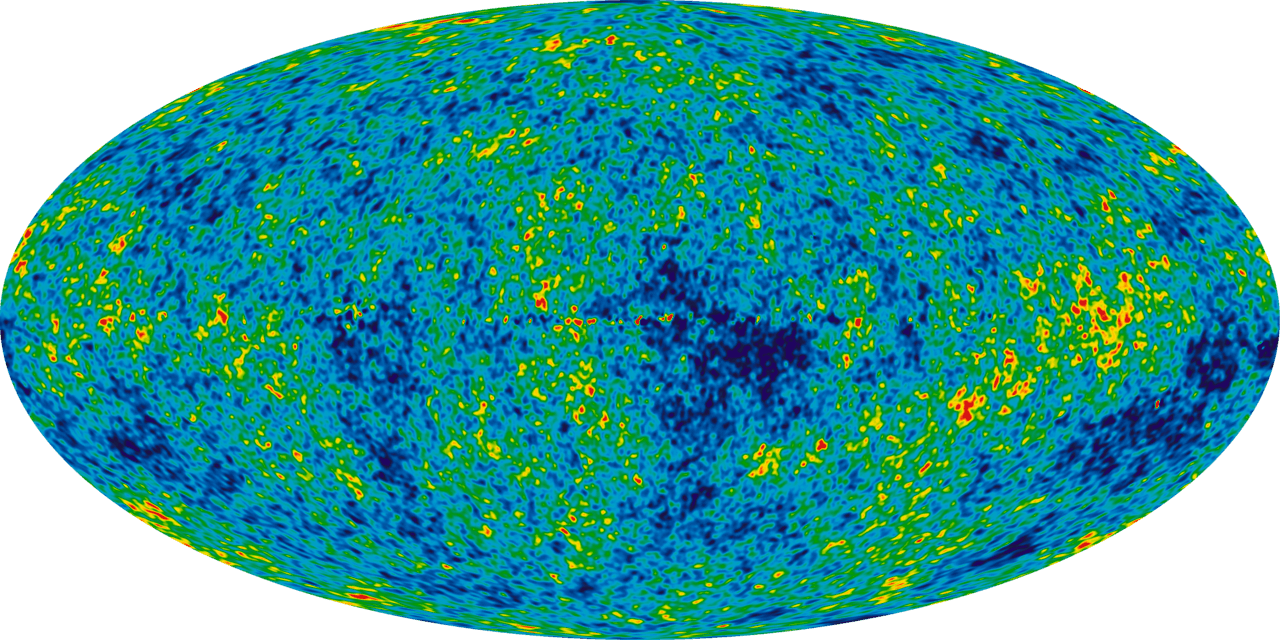
The Nasadiya Sukta, one of the oldest hymns in the Rig Veda, describes creation emerging from a single point. "There was neither existence nor non-existence. That One breathed windlessly by its own impulse." Modern cosmology arrived at the same starting condition. A singularity, breathing without breath, expanding into existence. The Rig Veda described it first.
An Expanding Universe
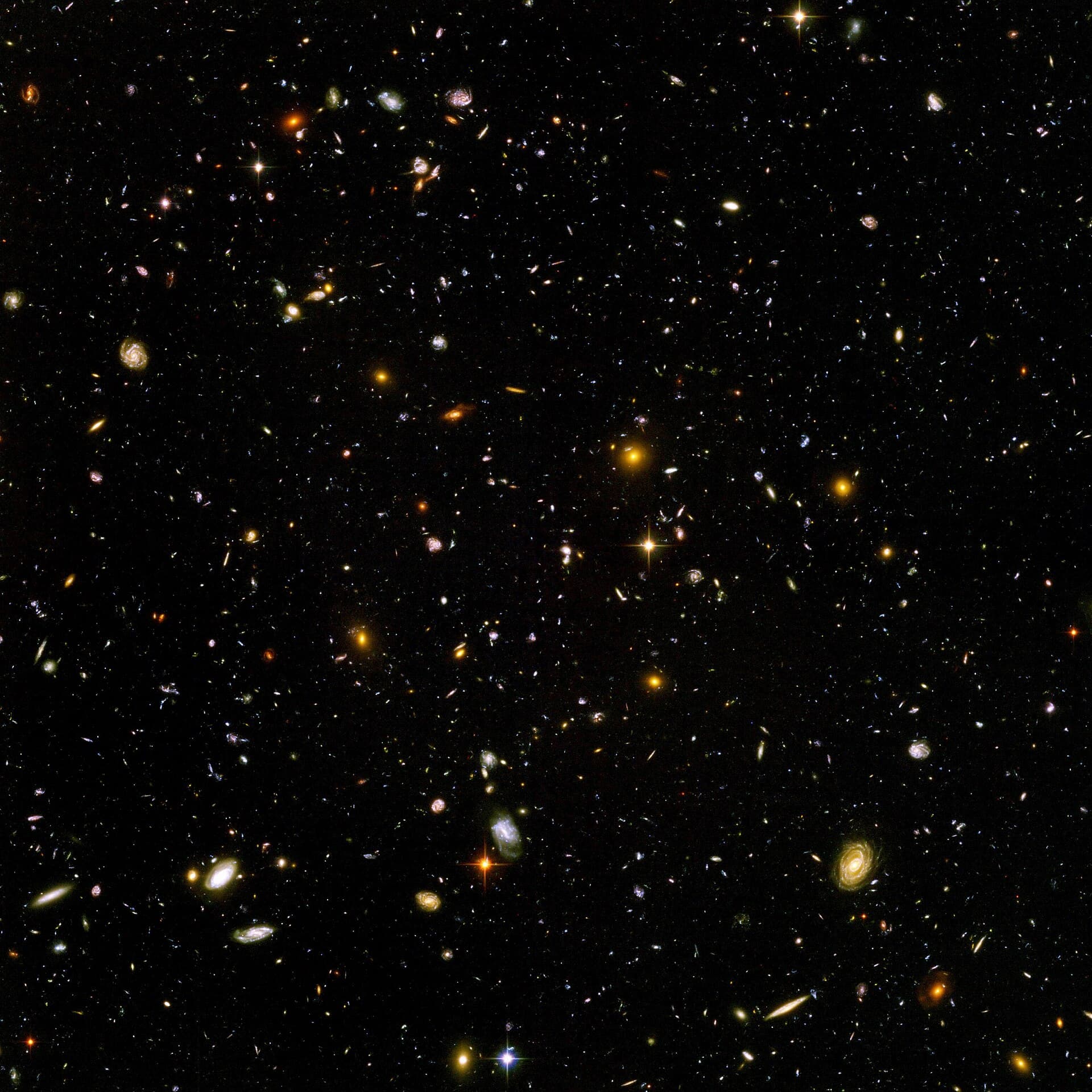
The Vedas describe the universe as constantly expanding. They call it Brahmanda, the cosmic egg, that grows infinitely. The Vishnu Purana states that the universe expands and contracts in cycles. Edwin Hubble discovered the universe was expanding in 1929. The Puranas had said the same thing thousands of years before.
Atomic Theory
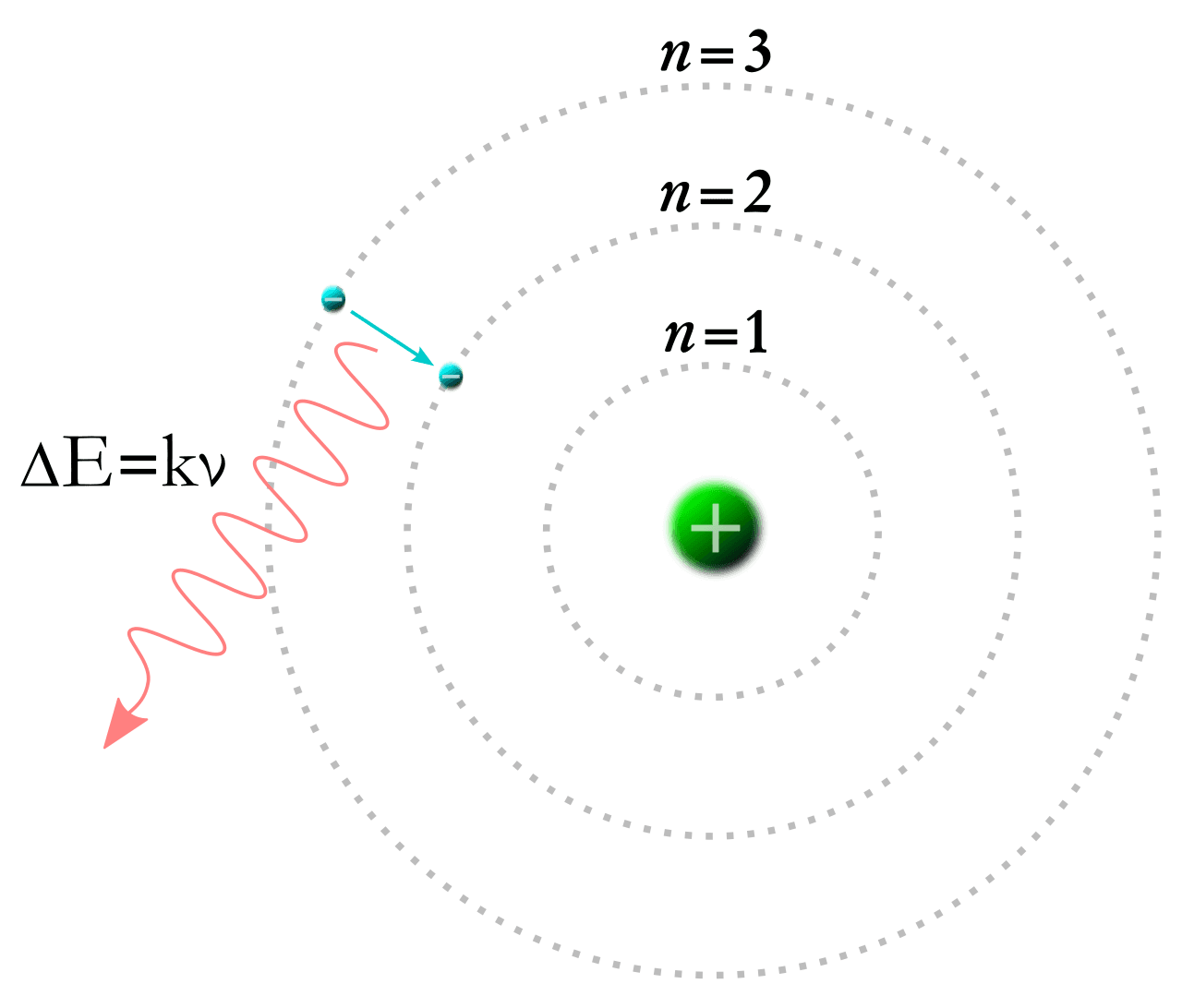
The sage Kanada, in his Vaisheshika Sutras around 600 BCE, proposed that all matter is made of anu, indivisible particles that combine to form everything we see. He described atoms as eternal, indestructible, and invisible. Western atomic theory arrived at the same conclusion millennia later.
The Speed of Light
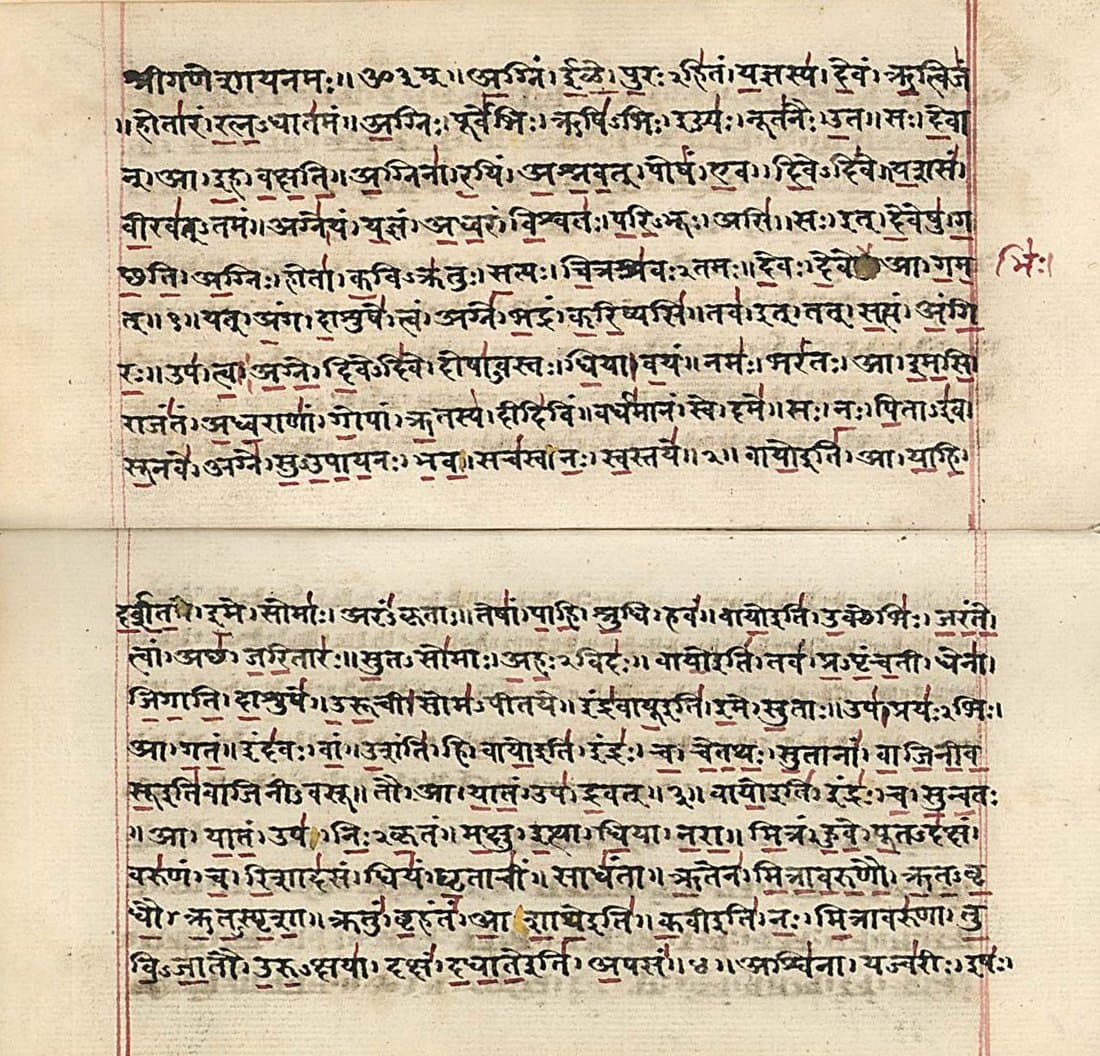
Sayana's commentary on the Rig Veda, written in the 14th century, contains a calculation of the speed of light that comes out to roughly 186,000 miles per second. The modern value is 186,282 miles per second. He arrived at it without any modern instruments, working only from the Vedic verses he was studying.
Gravitational Force
The Surya Siddhanta describes gravitational attraction directly. "Objects fall on earth due to a force of attraction by the earth. Therefore, the earth, the planets, constellations, moon, and sun are held in orbit due to this attraction." Newton would propose the same law more than a thousand years later.

The Age of the Earth
The Puranas describe cosmic time in scales that took modern science centuries to arrive at. A day of Brahma, the fundamental Puranic unit of cosmic time, is 4.32 billion human years. Modern geology dates the earth at roughly 4.54 billion years old. The two numbers are astonishingly close. Radioactive dating only arrived in the twentieth century. The rishis were writing about deep time, and getting the order of magnitude right, thousands of years earlier. Science did not correct Sanatana Dharma here. It caught up.
Archaeology
Ancient texts confirmed by modern discovery
Each one of these started as a story in a text and ended as a site you can visit, an image you can examine, or a dataset you can read.
The Submerged City of Dwarka
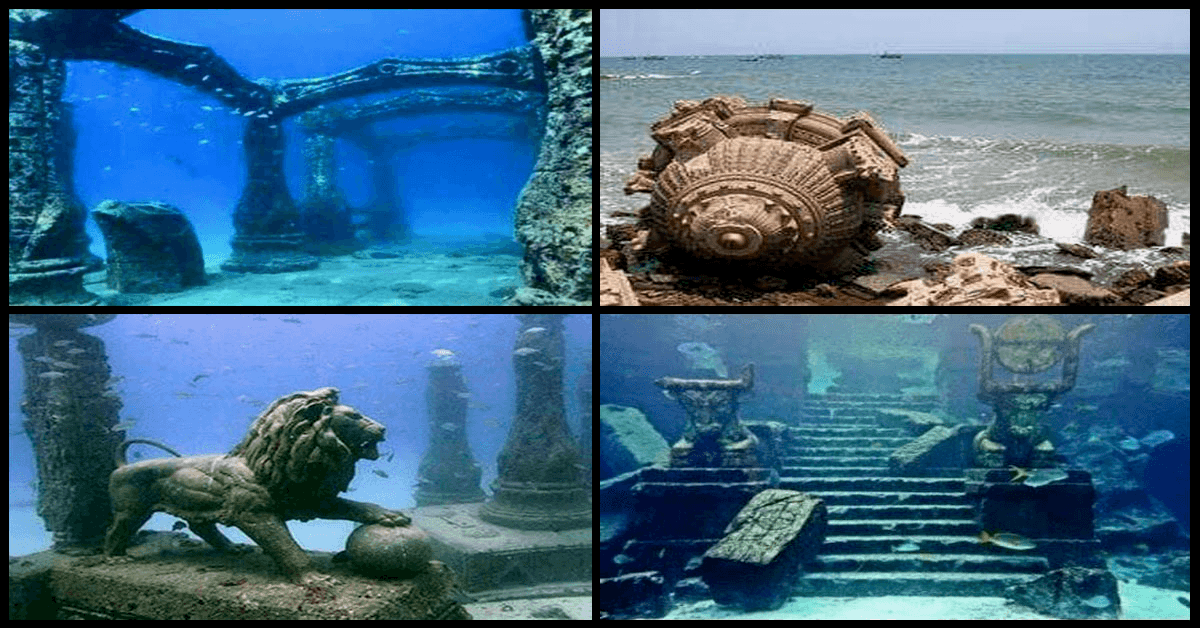
In 2001, marine archaeology in the Gulf of Khambhat discovered extensive underwater ruins off the coast of Gujarat. Structures dated to around 7500 BCE. Walls, pillars, anchors, pottery, and artifacts spread across nine kilometers. The texts had always said that Lord Krishna's city of Dwarka was submerged into the sea after his departure. The texts had been right.
Sources
- S.R. Rao, The Lost City of Dwaraka (Aditya Prakashan, 1999)
- National Institute of Ocean Technology, Survey Reports, 2001–2002
- Marine Archaeology Centre, National Institute of Oceanography, Goa
Mahabharata-Era Genetic Evidence
In 2015, a landmark genome study by Karmin and colleagues, published in Genome Research, analyzed 456 Y-chromosome sequences from across Europe, Asia, and Africa. They found something no one expected. Roughly 5,000 to 7,000 years ago, male genetic diversity collapsed. Not slowly — dramatically. In some populations, only one man was passing on his Y-chromosome lineage for every seventeen women.
Female genetic diversity, traced through mitochondrial DNA, stayed stable through the same period. Women survived. Men, in overwhelming numbers, did not.
The researchers ruled out disease. A plague would have taken women too. They concluded the collapse had to be a cultural change — warfare at a scale never seen before, sustained across generations.
The Mahabharata describes exactly this. Eighteen days of war between the Pandavas and the Kauravas, drawing in every king, every kshatriya, every warrior clan on the subcontinent. Traditional dating places the war between roughly 3,000 and 5,500 BCE. The same window the genetic data points to. The text ends with Yudhishthira surveying an emptied land, and Gandhari weeping over a hundred dead sons.
The text and the data don't just match. They match the same century.
Sources
- Karmin, M., Saag, L., Vicente, M., et al. A recent bottleneck of Y chromosome diversity coincides with a global change in culture. Genome Research 25, 459–466 (2015). doi:10.1101/gr.186684.114
- Zeng, T., Aw, A. & Feldman, M. Cultural hitchhiking and competition between patrilineal kin groups explain the post-Neolithic Y-chromosome bottleneck. Nature Communications 9, 2077 (2018).
Ram Setu
A 48-kilometer chain of limestone shoals between Rameswaram and Mannar Island. NASA satellite imagery shows what looks like a man-made structure. Geological surveys reveal stratification not typical of natural formations. Dating of coral samples suggests the bridge could be 7,000 to 10,000 years old. The stones have a unique porous composition that makes them lighter than typical limestone. Ancient texts describe Lord Rama's army building a bridge to Lanka using floating stones.

Sources
- NASA Remote Sensing Data of the Palk Strait region
- Geological Survey of India studies on the formation and dating
- S. Badrinarayanan, former Director, Geological Survey of India
Vrindavan and Mathura
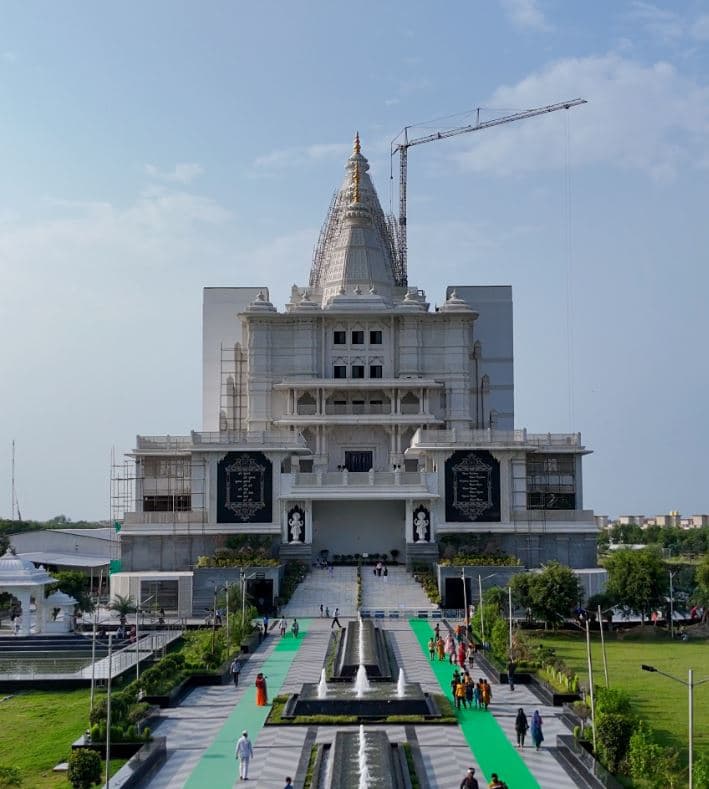
Archaeological excavations in Mathura have uncovered continuous habitation dating back over 2,500 years. The Keshava Deva temple excavations revealed older temple structures buried beneath, which suggests the site has been sacred for far longer. The artifacts, the inscriptions, the architectural remains are all consistent with everything the texts say about Lord Krishna's birthplace and childhood.
Sources
- Archaeological Survey of India excavation reports
- Indian Archaeological Society publications on Mathura
Ayodhya
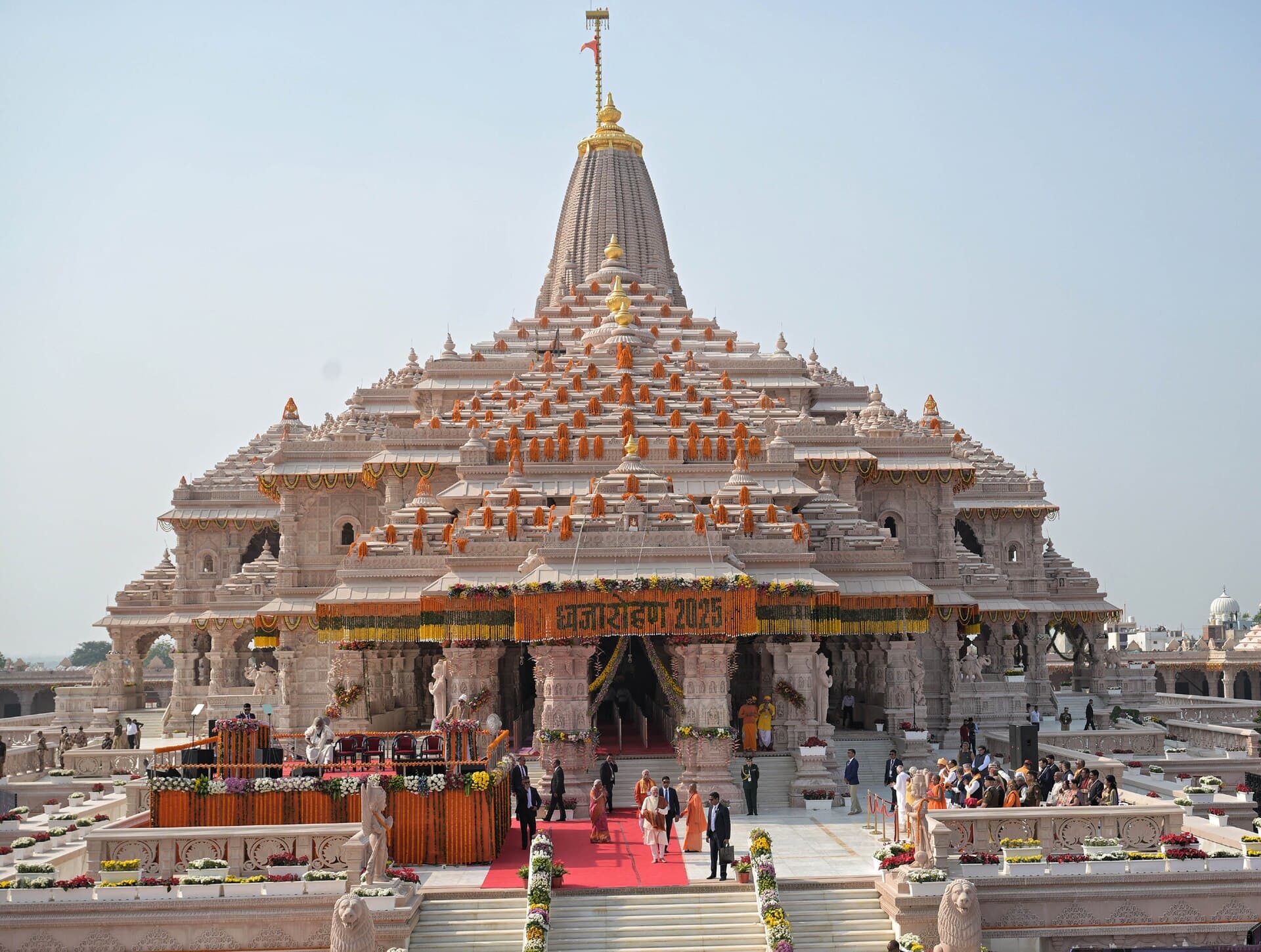
ASI excavations at the Ram Janmabhoomi site revealed remains of massive structures, pillar bases, carved architectural members, and temple artifacts spanning multiple periods. Twelve pillared halls. Continuous religious activity at the site for centuries. The texts have always called it Lord Rama's birthplace, and the archaeology supports that the site has been sacred for as long as people have been there.
Sources
- ASI Report of the Archaeological Excavations at Ayodhya (2003–2004), K.K. Mohammed
- B.B. Lal, Rama: His Historicity, Mandir and Setu (2008)
- Supreme Court of India Judgment (2019), detailed examination of archaeological evidence
The Saraswati River
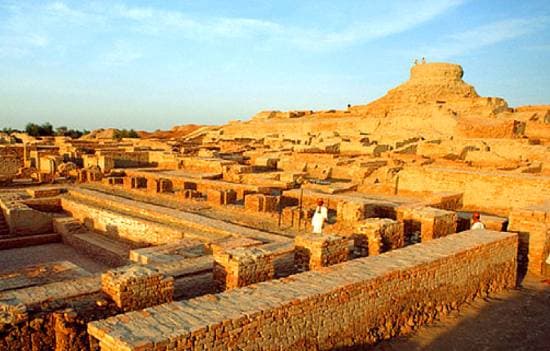
The Saraswati River was described in the Rig Veda as a mighty river, and for a long time historians thought it was mythical. Satellite imagery from ISRO traced the entire paleochannel of the river. It runs through Haryana, Rajasthan, and Gujarat, exactly where the texts placed it. Over 2,000 archaeological sites were found along the dried riverbed, more than along the Indus Valley itself. The river dried up around 2000 BCE due to tectonic plate movements. The civilization the texts described existed. It just had to be looked for in the right place.
Sources
- K.S. Valdiya, The River Saraswati was a Himalayan-born river (Current Science, 2013)
- ISRO remote sensing data and paleochannel mapping reports
- Physical Research Laboratory, Ahmedabad, isotopic studies confirming Himalayan origin
These findings strengthen my faith in Sanatana Dharma, but they are not why I believe. They are how I noticed I already did. What makes Sanatana Dharma the truth for me is the complete framework it gives me for understanding existence, consciousness, and the purpose of life.
Sanatana Dharma does not ask for blind belief. It encourages questioning. It encourages investigation. It encourages personal experience above everything else. The rishis discovered these truths through meditation and introspection thousands of years ago. The same truths are verifiable today, through both practice and inquiry.
The teachings work at multiple levels. They give practical guidance for daily life. They give deep philosophy for those who want to think carefully. They give transcendental experience for those who go all the way in. That depth and that universality is why it has lasted, and why it will keep lasting.
This is Sanatana Dharma.
While Sanatana Dharma is the truth for me, I do not believe it is the only valid path to the Divine. Every sincere tradition arose in a different time and place to guide people toward the same ultimate reality.
Rivers flow from different sources but they all merge into the same ocean. The names we give the Divine are different, the rituals are different, the languages are different. The destination is the same. Whether you call him Allah, God, Yahweh, the Buddha-nature, or Lord Vishnu, the sincere heart that seeks truth is dear to the Supreme.
Every religion teaches love. Every religion teaches compassion. Every religion teaches righteousness and surrender to something larger than yourself. These values are universal. They do not belong to one tradition. My love for Sanatana Dharma does not diminish my respect for other faiths. It deepens it. Sanatana Dharma itself teaches that truth is one, and the wise call it by many names.
एकं सद्विप्रा बहुधा वदन्ति
ekam sat vipra bahudha vadanti
Truth is one. The wise call it by many names. Rig Veda 1.164.46
Let us honor all paths. Let us respect all traditions. We are walking toward the same divine light. Just on different roads.
सर्वे भवन्तु सुखिनः सर्वे सन्तु निरामयाः
May all beings be happy. May all beings be healthy. May all experience goodness. May no one suffer.